COMPARE GENAQ v CHINA MANUFACTURED SPECIFICATIONS
If you are evaluating AWGs for Australian farming, mining, or bottling factories, the biggest differences are usually efficiency, low-humidity performance, build quality, certifications, support, and actual delivered output.
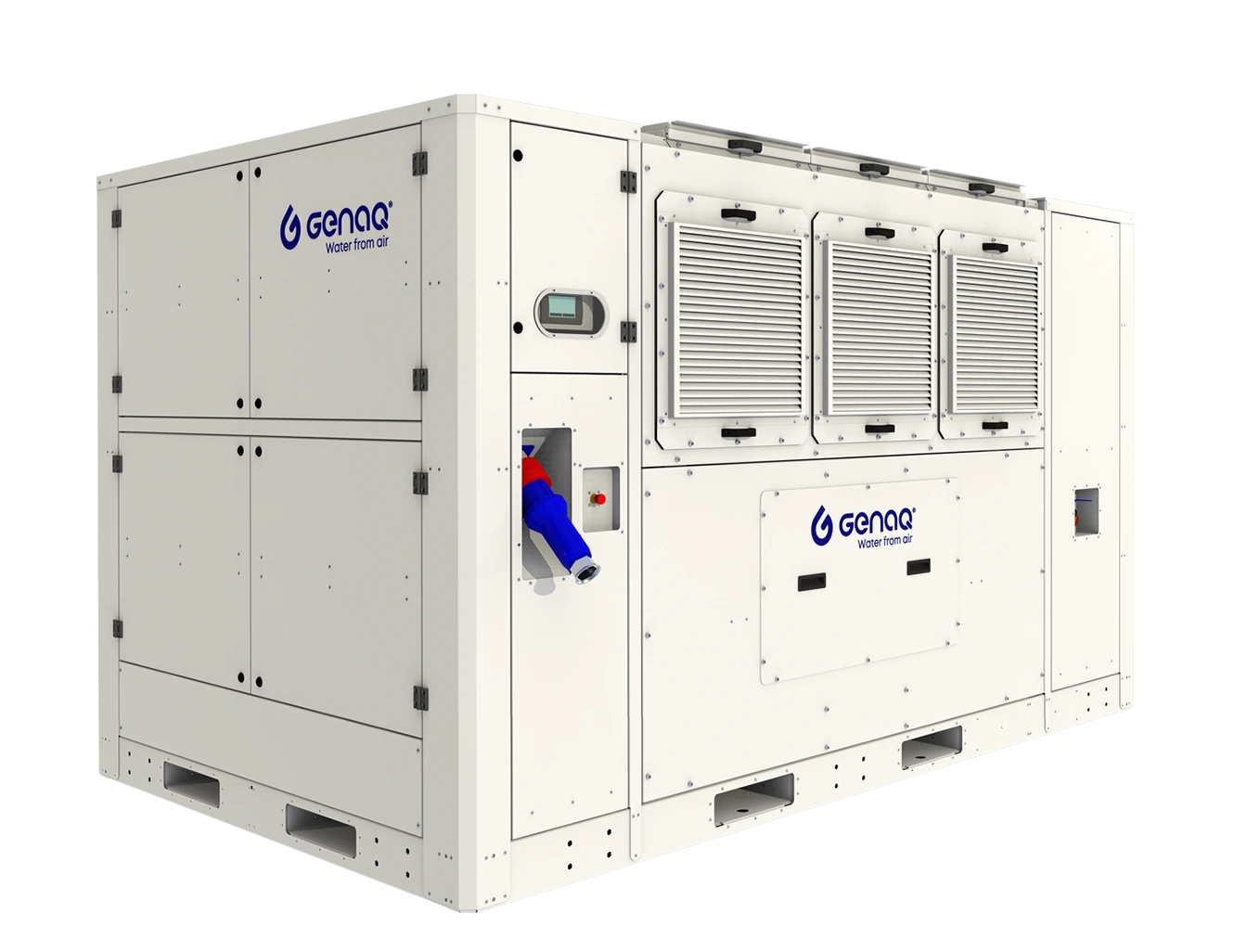
GENAQ 5,000 L/Day AWG. ~~ Bottled Water Factory Potential A 5,000 L/day AWG can produce approximately: 7,142 × 700 mL bottles/day. Thats good investment viability!
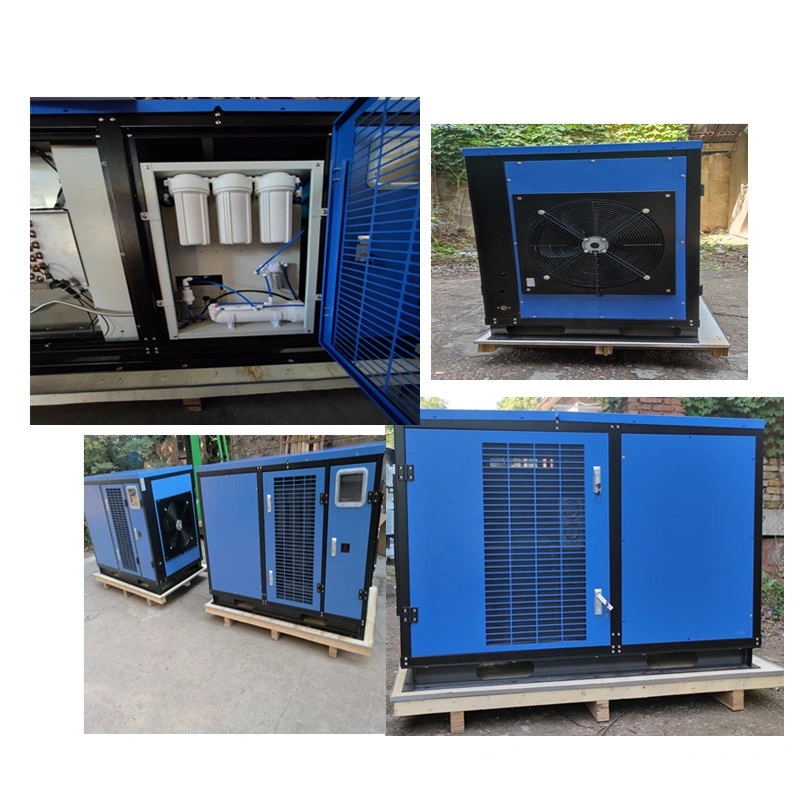
Typical Chinese 5,000 L/day examples show 46 kW input power at 5,000 L/day and operating humidity often above 45% RH.
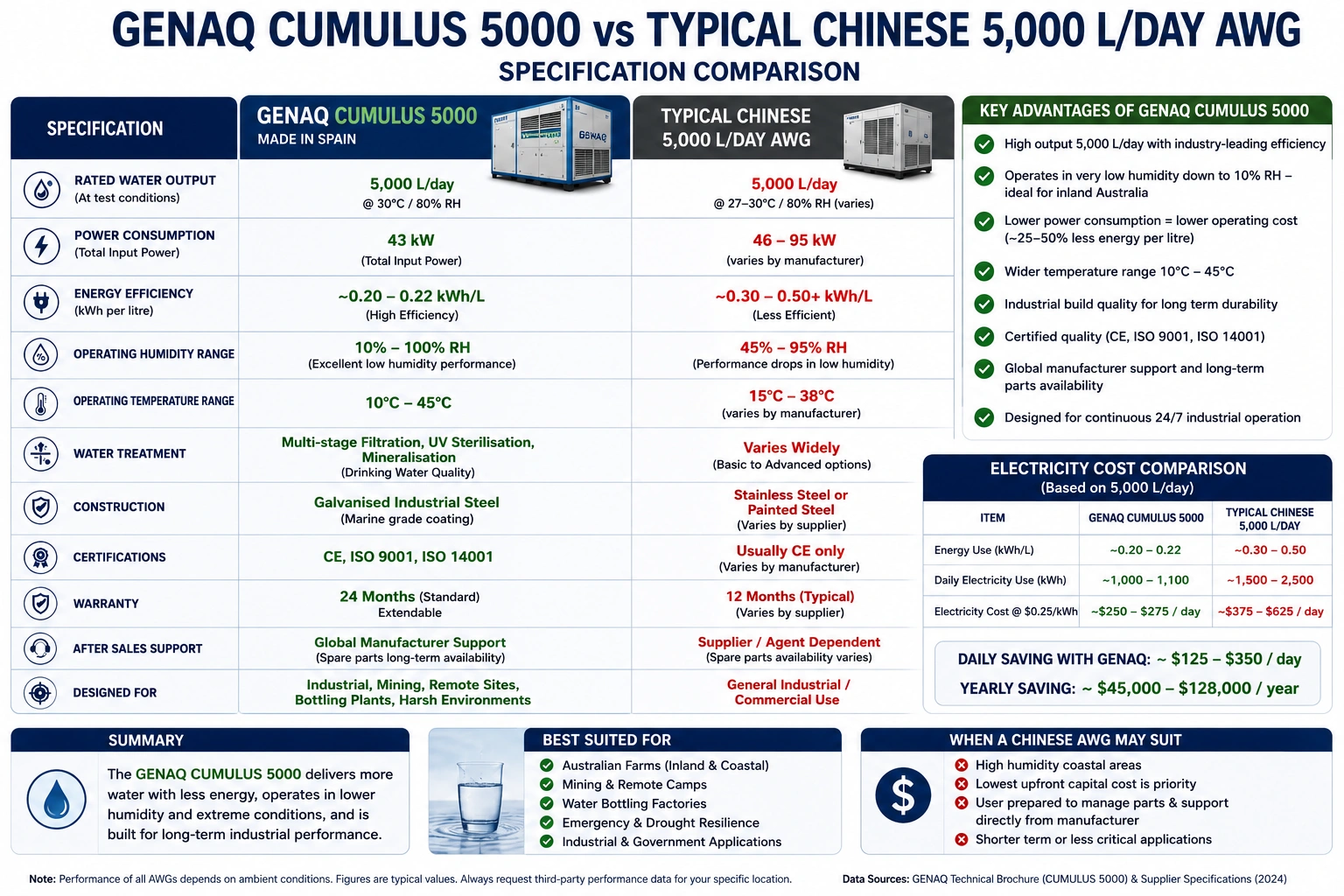
Comparison Overview Feature GENAQ Cumulus C5000 Typical Chinese 5,000 L/day AWG
When comparing the GENAQ Cumulus C5000 to a typical Chinese-manufactured 5,000 L/day AWG, the most important factors for Australian farmers, mining camps, remote communities, and bottled water factories are not simply litres per day, but actual delivered water, energy consumption, low-humidity performance, reliability, and lifecycle cost.
Atmospheric Water Generators are Going to Make History
Choosing the right Atmospheric Water Generator (AWG) begins with understanding the level of investment required for your water production goals. The estimated prices below provide a general budgeting guide for a range of GENAQ commercial systems, from small off-grid units through to industrial-scale water generation plants. These estimates are intended to assist with project planning, feasibility studies and preliminary budget development before requesting a formal quotation.
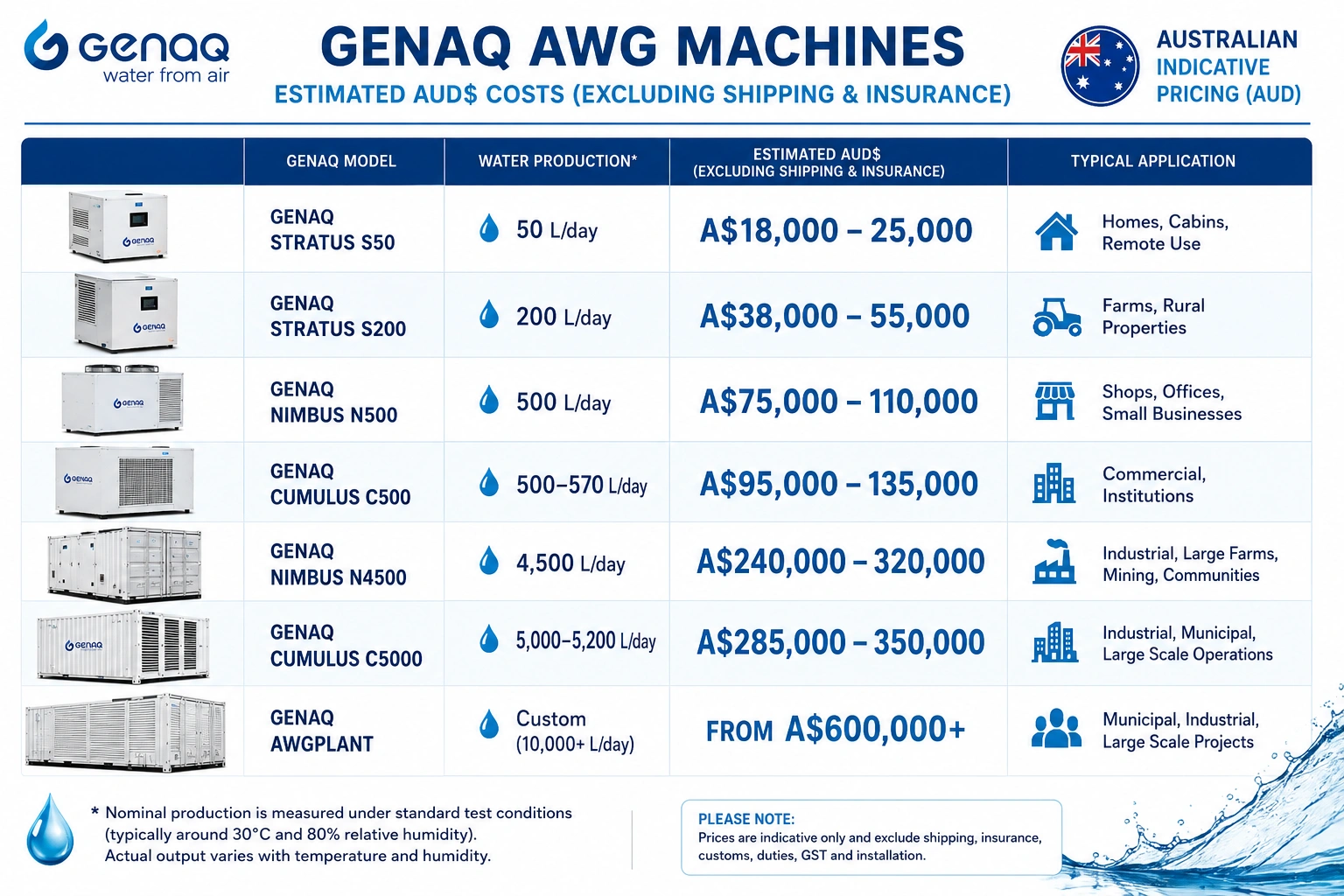
Indicative Australian Pricing Guide for GENAQ AWG Machines
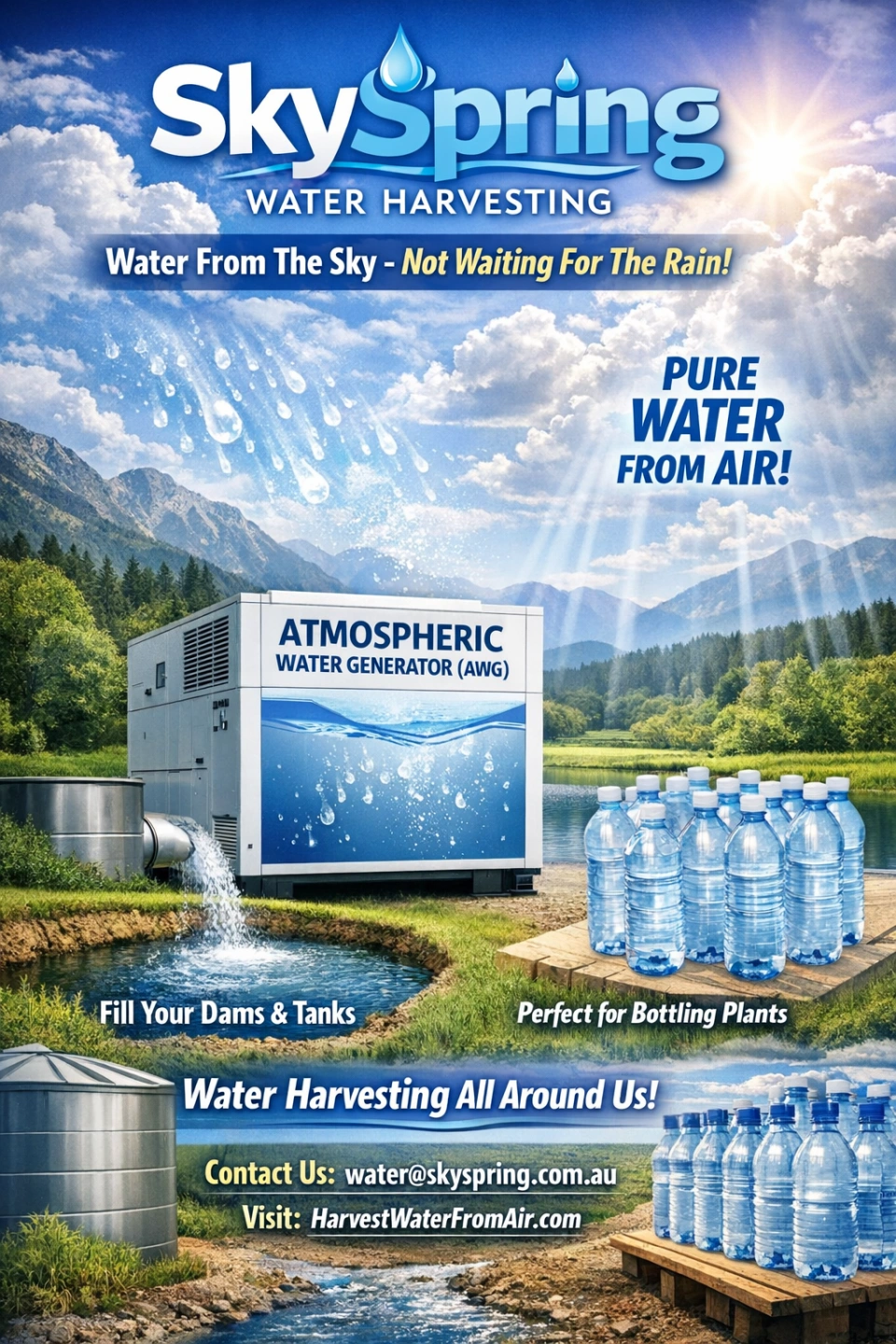
Planning an Atmospheric Water Generation Project?
GENAQ C5000 specification: 5,091 L/day and approximately 0.26 kWh/L.
Chinese example: 5,000 L/day with 46 kW input under 27°C/80% RH conditions.
Electricity Cost Example
Assuming:
Water output: 5,000 L/day
Electricity: $0.25/kWh
GENAQ C5000
5,000 × 0.26 kWh
≈ 1,300 kWh/day
≈ $325/day
Chinese AWG (0.40 kWh/L)
5,000 × 0.40 kWh
≈ 2,000 kWh/day
≈ $500/day
Difference
Daily saving ≈ $175
Annual saving ≈ $63,875
This is often more important than the initial machine purchase price.
Australian Farming Conditions
Coastal Queensland
Locations such as:
Noosa
Sunshine Coast
Bundaberg
Mackay
Cairns
Have high humidity much of the year.
In these areas, many Chinese machines can perform reasonably well if adequately supported.
Inland Australia
Locations such as:
Dubbo
Moree
Wagga Wagga
Mildura
Broken Hill
Western Queensland
often experience lower humidity.
This is where higher-efficiency European systems generally show their advantage because water output remains more stable under less favourable atmospheric conditions.
Build Quality
GENAQ C5000
Designed for:
Emergency response
Military camps
Humanitarian deployments
Mining operations
Remote infrastructure
Features include:
Reinforced transportable design
Industrial refrigeration components
European manufacturing standards
Global deployment history
Typical Chinese AWG
Quality varies enormously:
Some factories build excellent equipment.
Others use lower-grade compressors, PLCs, sensors, and refrigeration components.
Warranty and spare parts support can be inconsistent.
The biggest risk is usually not the machine itself, but obtaining technical support and parts 3–7 years later.
For a Bottled Water Factory
For a premium AWG bottled water operation:
GENAQ Advantages
✓ Better investor confidence ✓ European certifications ✓ Easier marketing of premium water ✓ Lower operating cost per litre ✓ Strong manufacturer reputation
Chinese Advantages
✓ Lower purchase price ✓ Faster return on capital if humidity remains high ✓ Attractive for budget-conscious projects
Overall Assessment [AI GPT]
Category Winner
Purchase Price - Chinese
Energy Efficiency - GENAQ
Low Humidity Performance - GENAQ
Reliability - GENAQ
Warranty Support - GENAQ
Spare Parts Confidence - GENAQ
Investor Confidence- GENAQ
Bottled Water Factory Use - GENAQ
Lowest Upfront Cost - Chinese
For an Australian farm water-security project or a premium atmospheric-water bottling factory, the GENAQ Cumulus C5000 is generally the stronger long-term commercial platform, while a Chinese 5,000 L/day AWG may suit projects where the primary objective is minimising initial capital expenditure.
What Matters for Australia
For e.g. Queensland coastal regions:
Both GENAQ and Chinese systems can perform well because humidity is often high.
Lower purchase price may favour Chinese machines.
For inland NSW, VIC, SA and WA farming areas:
Low humidity performance becomes critical.
GENAQ's stated operating range down to 10% RH is a major advantage.
Electricity Cost Comparison
Assuming:
GENAQ N4500 = 0.22 kWh/L
Chinese AWG = 0.35 kWh/L
Electricity = $0.25/kWh
Producing 5,000 L/day:
GENAQ N4500 ≈ $275/day electricity
Chinese ≈ $437/day electricity
Difference:
About $162/day
About $59,000/year
This is why industrial users often focus more on kWh per litre than machine purchase price.
For a Water Bottling Factory
If your goal is:
Premium bottled water
Long-term operation
Investor confidence
Australian farm demonstrations
GENAQ N4500 is generally the stronger industrial-grade option.
If your goal is:
Lowest capital cost
High humidity coastal locations
Willingness to manage parts and support directly from China then some Chinese manufacturers can offer substantially lower upfront costs.
For your planned Australian farm and bottling-factory projects, the key question is not "Which machine is cheapest?" but:
"Which machine produces the lowest cost litre of water over 10–15 years?"
That is where GENAQ's efficiency and low-humidity performance may outweigh a higher purchase price.